

Palm Beach County, FL Home Insurance: Flood, Wind and What It Costs
Homeowners in Palm Beach County typically carry three overlapping insurance policies: a standard homeowners policy, a windstorm component (separate or bundled), and a standalone flood policy. Together, those layers can run from a few thousand dollars per year for an inland home with a newer roof to well above $15,000 for a waterfront property in a high-velocity wave zone. Understanding how each piece works, what drives the cost, and where relief programs exist is the most practical starting point before buying or budgeting in this market.
Why Palm Beach County Homeowners Need Three Separate Policies
Palm Beach County homeowners typically need three separate policies because no single policy covers all the major risks: standard fire, theft, and liability; windstorm; and flood. Standard homeowners insurance does not cover flood damage, and in coastal South Florida it often falls short on windstorm coverage as well, depending on the carrier and the property's location.
Florida law does not mandate hurricane insurance outright, but lenders almost always require both windstorm and flood coverage when the mortgage is federally backed and the property sits in a designated Special Flood Hazard Area (SFHA). Even outside an SFHA, flood coverage requirements have been expanding under Florida law, particularly for Citizens Property Insurance policyholders (Florida Statute §627.715).
Windstorm Coverage in Palm Beach County
Windstorm coverage protects the structure of your home against damage from hurricanes, tropical storms, and named-storm wind events. In South Florida, this component generates the most premium pressure because insurers price it directly against Palm Beach County's hurricane exposure.
How windstorm is structured: Some private carriers include windstorm within a standard homeowners policy. Others write it as a separate wind-only policy, particularly for coastal properties. Citizens Property Insurance Corporation, Florida's insurer of last resort, offers both multiperil and wind-only policies.
Hurricane deductibles: Unlike the flat dollar deductible on a standard claim, hurricane deductibles are percentage-based, typically set at 2%–5% of the home's insured dwelling value. On a home insured for $500,000 with a 2% hurricane deductible, the homeowner absorbs the first $10,000 of any named-storm wind loss before coverage begins. This deductible applies only to damage triggered by a storm officially designated a hurricane by the National Weather Service.
What windstorm coverage costs: Total homeowners premiums in Palm Beach County span a wide range. Planning estimates for standard owner-occupied single-family homes run from the lower thousands for well-built inland properties with newer roofs to $15,000 or more for older coastal or waterfront homes. Luxury and high-value properties, which are common throughout Palm Beach County, carry higher rebuild costs and therefore higher dwelling coverage limits, pushing premiums further up that range. The specific address, roof year, opening protection, and carrier eligibility matter more than any county-wide average.
Citizens rate relief in 2026: Citizens policyholders in Palm Beach County received meaningful premium relief this year. In January 2026, the Executive Office of the Governor announced that approximately 26,000 Palm Beach County Citizens policyholders would see an average rate reduction of 11.9% at renewal.
Citizens subsequently confirmed a statewide average multiperil reduction of 8.8%, with a wind-only reduction of 5.5%, effective July 1, 2026 for new policyholders and at renewal for existing ones. These reductions followed tort reforms credited with attracting 17 new insurance companies to Florida and reducing Citizens' policy count from a peak of 1.41 million in October 2023 to approximately 336,000 by early 2026.
How to Reduce Your Windstorm Premium: Wind Mitigation Inspections
The most effective tool for lowering the windstorm portion of your premium is a wind mitigation inspection, and Florida law requires carriers to honor verified credits.
Under Florida Statute §627.0629, insurance companies must apply premium discounts when a licensed inspector documents specific wind-resistant features using the Uniform Mitigation Verification Inspection Form (OIR-B1-1802). The Florida Office of Insurance Regulation updated that form effective April 1, 2026, the first major revision in over a decade. Inspections completed under the new form better reflect current building science and, for some homes with recent upgrades, may produce more favorable credit documentation than older reports.
What inspectors evaluate:
- Roof covering material and wind rating
- Roof deck attachment (nail size, spacing, and plywood thickness)
- Roof-to-wall connections (hurricane straps, clips, or toenails)
- Roof geometry (hip roofs outperform gable roofs in high winds)
- Secondary water resistance (a self-adhesive underlayment applied under roofing material)
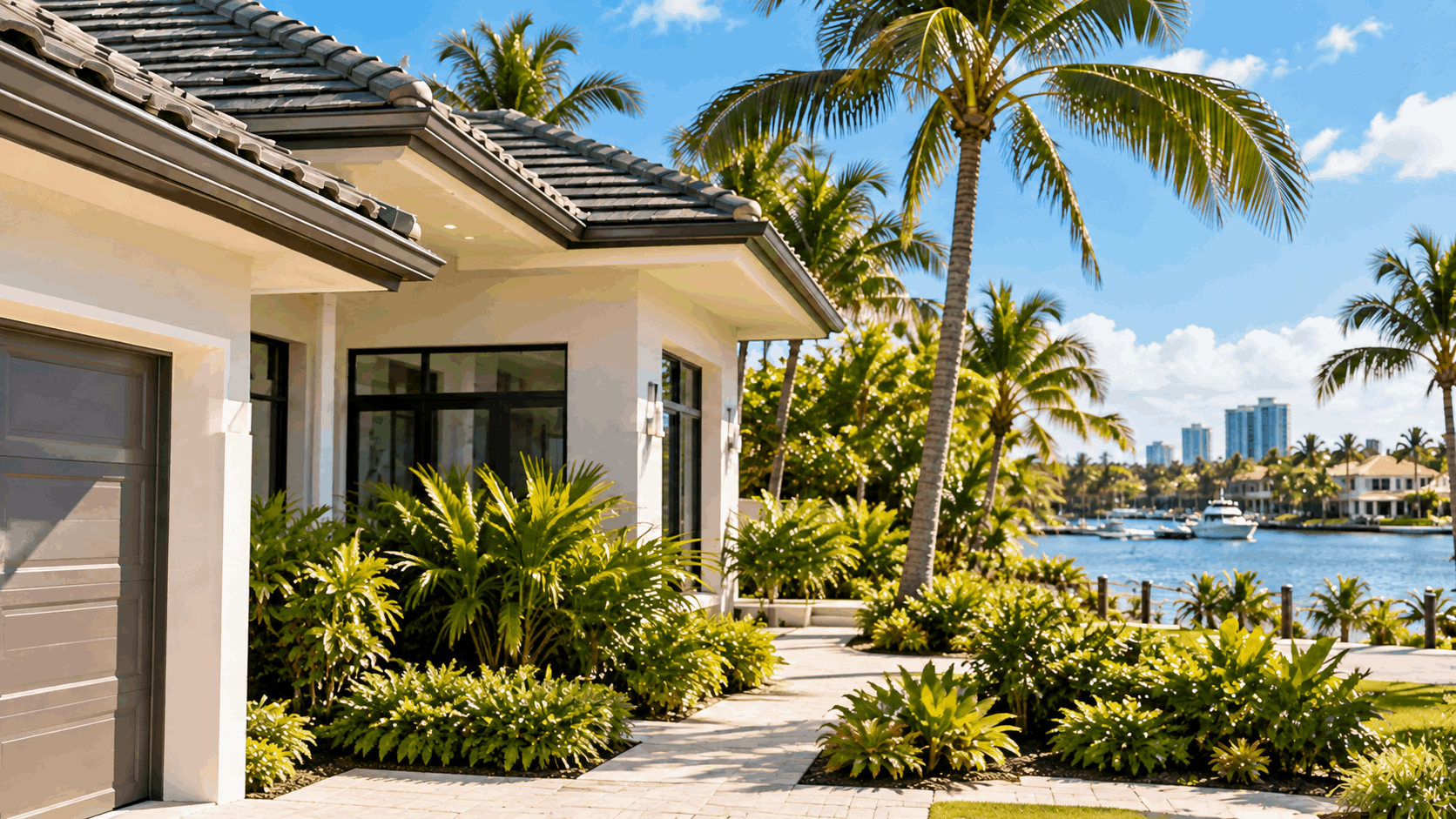
- Opening protection (windows, exterior doors, and garage doors protected by impact-rated products or approved shutters)
An inspection typically costs $95–$150 and produces a report valid for five years. Credits apply to the windstorm portion of the policy, which in South Florida often represents a substantial share of total premium. Homes with full opening protection, a hip roof, hurricane straps, and secondary water resistance documented on a current report tend to generate the most significant discounts.
My Safe Florida Home Program: The Florida Department of Financial Services administers the My Safe Florida Home (MSFH) program, which provides free wind mitigation inspections and matching grants of up to $10,000 for qualifying hurricane-hardening improvements, including impact-rated windows and doors, roof-to-wall connectors, secondary water barriers, and reinforced garage doors.
The 2025–2026 cycle reopened in August 2025 with $352 million in available funding, comprising $280 million in new legislative appropriations and approximately $72 million in residual funds from prior-cycle grants that expired unused. Eligibility is generally limited to homeowners with a homestead exemption, site-built homes permitted before January 1, 2008, and an insured value at or below $700,000. Income limits apply: grants are available to low- and moderate-income households only. The official application portal is at mysafeflhome.com.
Getting a wind mitigation report is most useful when paired with a realistic estimate of upgrade costs. Requesting quotes from at least two licensed contractors before committing to any project gives you a clearer picture of your actual return on investment over the five-year reporting window.
Flood Coverage in Palm Beach County
Flood damage is excluded from standard homeowners policies. A separate flood policy, through the National Flood Insurance Program (NFIP) or a private carrier, is the only way to cover storm surge, canal overflow, and heavy-rainfall surface flooding, all real risks in Palm Beach County.
Updated FEMA flood maps: Palm Beach County's Flood Insurance Rate Maps were revised and took effect December 20, 2024, adding thousands of residents in the eastern portion of the county to high-risk flood zones. If you purchased or refinanced before that date, your flood zone designation may have changed. The county's GIS flood zone lookup tool allows owners to verify their current designation by address.
Flood zones and what they mean for Palm Beach County homeowners:
| Flood Zone | Risk Level | Federally Backed Mortgage Requirement | Typical Profile |
|---|---|---|---|
| Zone X (unshaded) | Minimal (below 0.2% annual chance) | Not required | Most inland areas |
| Zone X (shaded) | Moderate (0.2% annual chance) | Not required | Near floodplain boundaries |
| Zone AE | High (1% annual chance) | Required | Canal-adjacent, Intracoastal-adjacent areas |
| Zone VE | Highest (coastal wave action) | Required | Beachfront and barrier island properties |
What NFIP flood insurance costs: Palm Beach County NFIP policyholders pay an average of approximately $555 per year, well below the statewide Florida average of roughly $938 per year. That lower county average reflects Palm Beach County's comparatively modest flood-risk profile relative to many other Florida coastal counties.
For additional context on the longer-term trajectory of Palm Beach County flood premiums, FEMA's Risk Rating 2.0 county-level dataset (policies in force as of August 31, 2023) showed an average paid premium of $682 against a risk-based rate of $709, a gap of approximately 4%. That 4% differential was among the smallest in Florida, meaning Palm Beach County policyholders faced considerably less upward rate pressure over time than many other coastal counties where risk-based rates exceeded current premiums by substantially larger margins. NFIP annual increases are capped at 18% per year under federal statute, so even where gaps exist, they close gradually.
Private flood insurance: NFIP policies cap dwelling coverage at $250,000 and contents coverage at $100,000. Many Palm Beach County homes, particularly in the mid-range to luxury segment, require coverage well above those limits. Private flood insurers can offer higher coverage amounts, more flexible deductible structures, and shorter waiting periods than the NFIP's standard 30-day window. An independent insurance agent can compare NFIP and private options side by side for a specific address.
Citizens and the expanding flood coverage requirement: If your homeowners policy is through Citizens Property Insurance, Florida law requires flood coverage on a phased schedule under Florida Statute §627.715. Policies covering dwellings valued at $400,000 or more have been required to carry separate flood insurance since January 1, 2026. By January 1, 2027, the requirement extends to all Citizens personal residential policies that include wind coverage, regardless of insured value. Condominium unit-owner policies and policies without wind or hail coverage are exempt. Citizens does not sell flood insurance, so policyholders must obtain a separate NFIP or private policy and provide proof of coverage at renewal.
Key Factors That Move Your Premium in Palm Beach County
Five variables account for most of the premium variation between otherwise comparable Palm Beach County homes: roof age, construction type, elevation above Base Flood Elevation, opening protection, and carrier eligibility. Whether you are evaluating a home in West Palm Beach, Delray Beach, Palm Beach Gardens, or Palm Beach, the same core variables determine where your total cost lands.
Roof age and condition: Carriers scrutinize roof age closely. Homes with roofs older than 15–20 years frequently face non-renewal notices or significant surcharges. A documented roof replacement at or before purchase often changes the insurance picture more dramatically than any other single upgrade.
Construction type and year: Concrete block construction permitted under or after the 2002 Florida Building Code generally outperforms older wood-frame or pre-code construction on insurance pricing. The 2002 code introduced mandatory wind-load requirements that changed how Palm Beach County homes perform under hurricane conditions.
Elevation and proximity to water: Distance from the Atlantic Ocean, the Intracoastal Waterway, or inland canals affects both windstorm and flood pricing. Each additional foot of elevation above Base Flood Elevation (BFE) can reduce flood premiums measurably. An elevation certificate, prepared by a licensed surveyor or engineer, documents your home's actual elevation and can form the basis for a lower flood rate if your home sits higher than FEMA's maps assume.
Opening protection: Impact-rated windows, exterior doors, and garage doors, or approved storm shutters covering all openings, qualify for the highest tier of wind mitigation credits. In Palm Beach County, products must meet the Miami-Dade County High-Velocity Hurricane Zone (HVHZ) standard to qualify for that top-tier credit under the OIR-B1-1802 form.
Carrier competition: Florida's insurance market has more active carriers in 2026 than it has had in years, with 17 new companies entering since tort reform legislation passed. That competition has begun translating into rate reductions, but coverage eligibility, deductible structures, and exclusions vary substantially between carriers, making a side-by-side comparison essential.
Buying or budgeting in Palm Beach County and want to understand how a property's construction, roof condition, and flood zone designation translate into real insurance costs?
The Comerford Group brings builder-level knowledge of construction and renovation to every transaction.
Contact us at (941) 586-3229 to talk through what a specific property's numbers might look like before you make an offer.
Frequently Asked Questions
Do I need separate windstorm and flood policies in Palm Beach County?
For most Palm Beach County properties, yes. Standard policies exclude flood damage entirely, and windstorm coverage for coastal South Florida properties often requires a separate policy or a specific endorsement. If your property carries a federally backed mortgage and sits in a Special Flood Hazard Area, both coverages are required by your lender. Even for homes outside SFHAs, Citizens policyholders are now subject to a phased flood insurance mandate that reaches all wind-covered residential policies by January 1, 2027.
How does Palm Beach County's flood insurance cost compare to the rest of Florida?
The county's average NFIP premium runs roughly $555 per year, compared with a statewide Florida average of approximately $938. That gap reflects Palm Beach County's comparatively modest flood-risk pricing profile relative to many coastal peers. Your actual cost depends on flood zone, coverage amount, elevation, and whether you use NFIP or a private carrier.
What is a hurricane deductible and how does it work?
A hurricane deductible is a separate, percentage-based deductible that applies only when a storm receives an official hurricane designation from the National Weather Service. Florida carriers typically set it at 2%–5% of the home's insured dwelling value rather than a fixed dollar amount. On a $400,000 home with a 2% hurricane deductible, the homeowner is responsible for the first $8,000 of a qualifying wind claim before the policy responds. Damage from a tropical storm or general windstorm that was never officially classified as a hurricane falls under the standard flat deductible instead.
What is a wind mitigation inspection and how much can it save?
A wind mitigation inspection documents your home's hurricane-resistant features on Florida's official OIR-B1-1802 form, and carriers are legally required under Florida Statute §627.0629 to apply premium discounts for verified qualifying features. A hip roof, hurricane straps at roof-to-wall connections, secondary water resistance, and full opening protection produce the most meaningful savings. The inspection costs roughly $95–$150 and the report is valid for five years. For Palm Beach County homeowners already paying elevated premiums, the documented savings over a five-year reporting window typically exceed that upfront cost by a significant margin.
What changed with Palm Beach County's FEMA flood zone maps?
Revised Flood Insurance Rate Maps for Palm Beach County took effect December 20, 2024, reclassifying additional properties in the county's eastern region into Special Flood Hazard Areas. Homeowners remapped into a high-risk zone who carry a federally backed mortgage are now required to carry flood insurance. If your purchase or refinance closed before December 2024, verifying your current flood zone through the county's GIS tool is worthwhile, as your coverage obligations may have changed since closing.
Categories
Recent Posts


Leave a reply